9.03m is a strange game. By which I mean, it's not a game - and good for it. I'll be looking over a few more not-games in the near future and tagging them for easy reference. But first, what is a not-game? Well... It's lacking something inherently game-ish. For me, this definition has mostly to do with mechanics. These not-games all have in common a lack of mechanics. They will never be fun in the same way that, say, Peggle or Mini Metro might be. They'll never have that "just another round" feel of Civ or Stone Soup. In short, the mechanics are sparse and not engaging by themselves. A not-game uses its sparse mechanics to bolster the experience of the game.
Showing posts with label Game Design. Show all posts
Showing posts with label Game Design. Show all posts
Monday, June 23, 2014

Wednesday, June 4, 2014
Mini Metro
Strangely enough, the best game I've played all year might just be an abstract puzzle game based on metro system organization. I've always had a fascination for metro maps; they're beautiful, abstract overlays ontop of the messy complications of a real city.
So... I'm sort of surprised that an idea for game-ifying this hadn't occurred to me. Or anyone, apparently. Which is why I find myself playing just another round of Mini Metro to get screenshots for this article. Yep. Just for the screenshots.
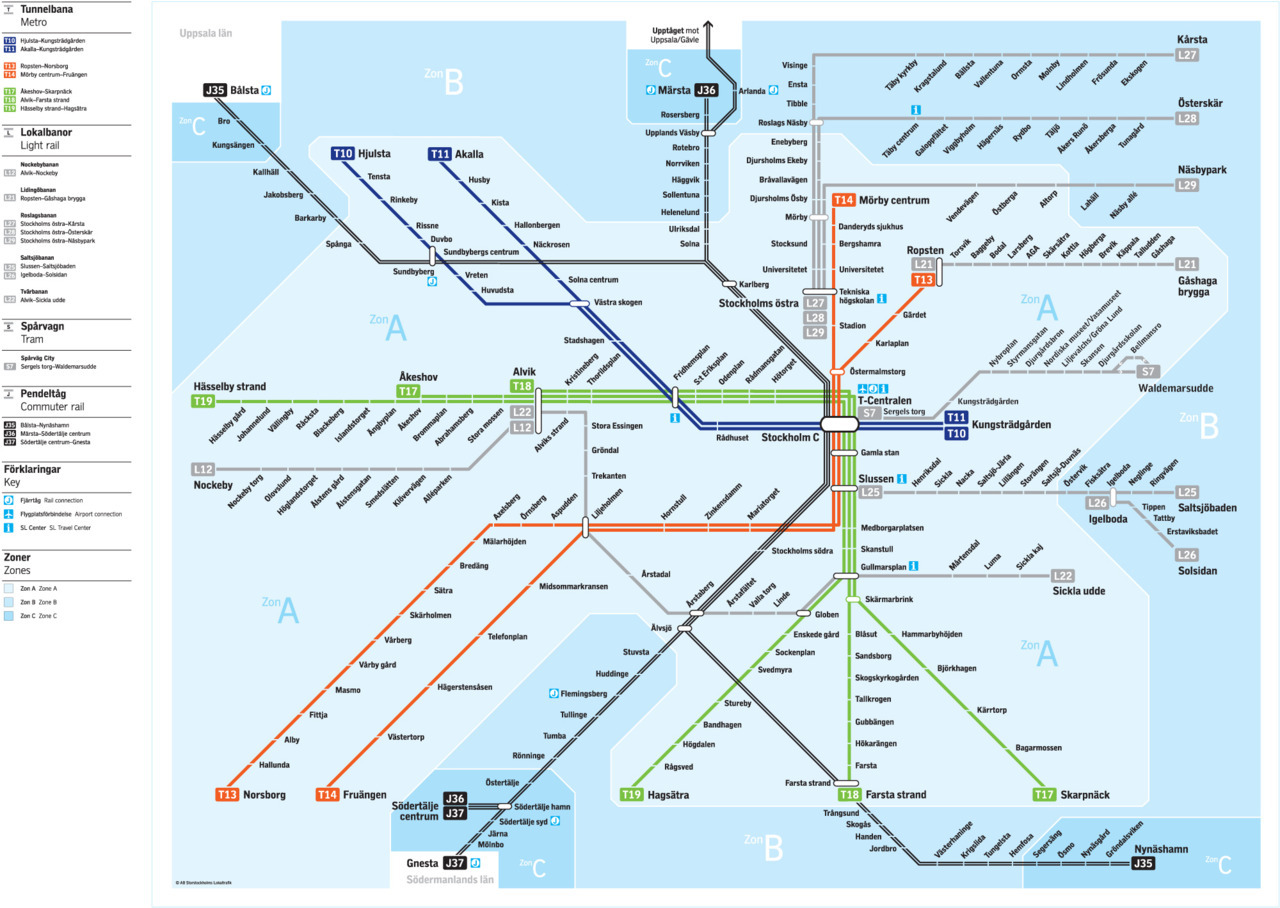 |
| My favorite metro; Stockholm's. It's practically already a minimalist board game... |
So... I'm sort of surprised that an idea for game-ifying this hadn't occurred to me. Or anyone, apparently. Which is why I find myself playing just another round of Mini Metro to get screenshots for this article. Yep. Just for the screenshots.
Thursday, October 18, 2012
Torchlight 2: A Lesson in Lost Lessons
I bought Torchlight 2 on launch. Yesterday, about two hours into it, I found myself wondering why I wasn't having fun. And... it's because Torchlight 2 was more of the same - just more Torchlight. Torchlight itself was an exercise in frustrated design - it had so much promise that was ruined by poor mechanics and a misunderstanding of fun. How?
Thursday, July 14, 2011
What I did today, or, excuses for a day wasted
Hi. I sorta just lazed around all day, but in doing so, I also discovered a few awesome things.
First is the Caves of Qud, a heavily Fallout-inspired post-apocalyptic Roguelike (is Fallout-inspired and post-apocalyptic redundant?). It's currently in (hopefully open?) beta. I spent at least four hours playing it, doomed character after doomed character until I made some headway in the main 'quest line' and found my feet. It is simply amazing.
First is the Caves of Qud, a heavily Fallout-inspired post-apocalyptic Roguelike (is Fallout-inspired and post-apocalyptic redundant?). It's currently in (hopefully open?) beta. I spent at least four hours playing it, doomed character after doomed character until I made some headway in the main 'quest line' and found my feet. It is simply amazing.
Dawn of War II, post-play

Wednesday, June 1, 2011
Brainfreeze? No, just Frozen Synapse
I bought Frozen Synapse today, and have spent the last... four and a half hours playing it. It's brilliant, and showcases a few key game design decisions. First, though, I need to come level: I haven't touched the campaign. I did the tutorial, and then a few bot skirmishes, and then I threw myself into the multiplayer fray.
The multiplayer shines. And gleams. The gameplay is derived from such classics as X-COM and Laser Squad Nemesis, but is also highly reminiscent of Blendo Games' Flotilla. All of these are great games, and all of them but Laser Squad Nemesis have special places in my heart. Anyways, the gameplay in Frozen Synapse consists of giving five seconds worth of orders to each man in a squad of 1 to 5 soldiers, armed with the usual suspects (machineguns, shotguns, rocket launchers, sniper rifles). Your orders and your opponent's orders are then executed simultaneously. Which means that they can conflict. And kill each other. The game quickly becomes about feinting; you can wait, to hold an action for later in a round, or execute it immediately. You can turn off auto-fire and sprint from cover to cover to get to an advantageous position, or you can hunker down and hope for the best. You can carefully time waits to land explosives in an area all at once, even with different times of flight. Even better, it has a double-blind mode, where you can only see what your soldiers see; you're never aware of where exactly the enemy is.
So... This is great and all, but what makes it an exceptional game? First, conceptually, it does away with the troublesome problem of 'luck.' (Disclaimer: All that follows is carefully inferred from critically playing, mashing the replay button, and reading blurbs. I'd love to see the logic that actually determines combat). Combat advantage is calculated (bonuses for shooter: waist-high cover, low light, non-moving target) for the shooter and the target, and the higher one wins over a period of time determined by the difference in advantage. This means that if the difference is small, units can 'sprint' through gunfire and survive. There's a slight variation for explosive users (grenadiers and rocketeers); their shots always "hit," and their time in the enemy LoS determines whether or not the conventional arms fire kills them. Once the advantage is determined, the engine (appears to) render random shots to indicate misses, until the critical time threshold is met and the loser dies.
For me, having a game setting this explicable (versus, "you got unlucky and died") is a great selling point. But speaking of selling points, the reason I bought this game is sort of laughable. It was $5 off, buy-1-get-1-free, and I instantly fell in love with the graphics. They're very similar to Atom Zombie Smasher's graphics, (which, like Flotilla, is another Blendo Games production) and I love the stylized, vector-esque, Tron-esque look.
And finally, the game has a wonderful sense of community. No matter what you're doing (playing the campaign, playing multiplayer, watching replays), you can be lurking in the built-in IRC client in the game's channel. With support for saving replays. And exporting to youtube. A lot of the web-2.0-integration stuff seems superfluous and goofy to me, but integrated IRC is both ingenius and (I imagine) much easier on them than writing a chat server/client interface. In fact, it reminded me of Dungeon Crawl: Stone Soup's (optional) IRC integration; it greatly expands the game's longevity and 'fun' without requiring the game developer to expend much more effort.
TL;DR: What does Frozen Synapse get right?
The multiplayer shines. And gleams. The gameplay is derived from such classics as X-COM and Laser Squad Nemesis, but is also highly reminiscent of Blendo Games' Flotilla. All of these are great games, and all of them but Laser Squad Nemesis have special places in my heart. Anyways, the gameplay in Frozen Synapse consists of giving five seconds worth of orders to each man in a squad of 1 to 5 soldiers, armed with the usual suspects (machineguns, shotguns, rocket launchers, sniper rifles). Your orders and your opponent's orders are then executed simultaneously. Which means that they can conflict. And kill each other. The game quickly becomes about feinting; you can wait, to hold an action for later in a round, or execute it immediately. You can turn off auto-fire and sprint from cover to cover to get to an advantageous position, or you can hunker down and hope for the best. You can carefully time waits to land explosives in an area all at once, even with different times of flight. Even better, it has a double-blind mode, where you can only see what your soldiers see; you're never aware of where exactly the enemy is.
So... This is great and all, but what makes it an exceptional game? First, conceptually, it does away with the troublesome problem of 'luck.' (Disclaimer: All that follows is carefully inferred from critically playing, mashing the replay button, and reading blurbs. I'd love to see the logic that actually determines combat). Combat advantage is calculated (bonuses for shooter: waist-high cover, low light, non-moving target) for the shooter and the target, and the higher one wins over a period of time determined by the difference in advantage. This means that if the difference is small, units can 'sprint' through gunfire and survive. There's a slight variation for explosive users (grenadiers and rocketeers); their shots always "hit," and their time in the enemy LoS determines whether or not the conventional arms fire kills them. Once the advantage is determined, the engine (appears to) render random shots to indicate misses, until the critical time threshold is met and the loser dies.
For me, having a game setting this explicable (versus, "you got unlucky and died") is a great selling point. But speaking of selling points, the reason I bought this game is sort of laughable. It was $5 off, buy-1-get-1-free, and I instantly fell in love with the graphics. They're very similar to Atom Zombie Smasher's graphics, (which, like Flotilla, is another Blendo Games production) and I love the stylized, vector-esque, Tron-esque look.
And finally, the game has a wonderful sense of community. No matter what you're doing (playing the campaign, playing multiplayer, watching replays), you can be lurking in the built-in IRC client in the game's channel. With support for saving replays. And exporting to youtube. A lot of the web-2.0-integration stuff seems superfluous and goofy to me, but integrated IRC is both ingenius and (I imagine) much easier on them than writing a chat server/client interface. In fact, it reminded me of Dungeon Crawl: Stone Soup's (optional) IRC integration; it greatly expands the game's longevity and 'fun' without requiring the game developer to expend much more effort.
TL;DR: What does Frozen Synapse get right?
- Complex-but-predictable mechanics with emergent gameplay based on out-maneuvering the other player
- The predictability of the mechanic is essential! You know almost immediately after you've made a poor choice. More on this later.
- A "primitive" but excellently stylized art direction ("it's not about the graphics, it's about the art").
- A sense of connectedness to other players in the multiplayer via IRC.
TL;DR: What does it do poorly?
- Documentation. The tutorial set out about 75% of the mechanics, and expects you to learn the other 25% magically. (The "check" command and the line of sight tool are never addressed, for example). Exactly what contributes to the advantage calculations is never explicitly addressed.
- IRC client interface. It can't be drag-resized, tabs can't be closed, etc.
- I had a short discussion with one of the other players, and he brought up an excellent point: it's problems like this that are quietly, unassumptively vital to a game's survival. The longevity of Frozen Synapse will be in its multiplayer scene, and the ease-of-use of tools like these will determine the attach rate of new players. Shit's serious, in other words.
Would I recommend it? Although it does come with a steep learning curve, most certainly. Especially if the campaign turns out to be good, although I don't have great expectations; this seems like a game built for the multiplayer. Perhaps I'll be pleasantly surprised.
-Ashton
Aside: I think I'll make game review/critique/exemplars a regular feature on Immutable Strings? It's certainly easy enough to write about them, and it leads to nice little lists of "do's" and "dont's" for game design.
Subscribe to:
Posts (Atom)